Designing the Emergency Brake: How Enterprises Can Build Autonomous Systems That Know When to Stop

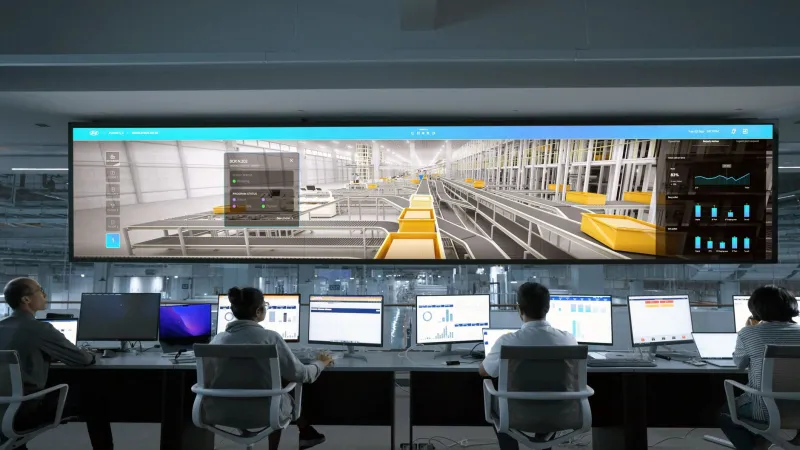
Photo: Renji Shino, CC BY-SA 4.0, via Wikimedia Commons
The Paradox at the Heart of Autonomous Enterprise Systems
Every serious enterprise deployment of decentralized or autonomous technology eventually arrives at the same uncomfortable question: what happens when something goes wrong and no one is in charge?
The question is not hypothetical. Smart contracts have executed catastrophically due to logic errors. Autonomous trading systems have amplified market dislocations. Decentralized governance mechanisms have been captured by adversarial actors. In each case, the absence of a meaningful intervention capability transformed a recoverable incident into an irreversible one.
The enterprise response to this pattern has often been to quietly re-centralize—to add administrative keys, governance multisigs, or manual override procedures that effectively recreate the control structures the decentralized architecture was meant to eliminate. This is understandable as a risk management instinct. It is, however, architecturally incoherent if done without deliberate design.
The more disciplined approach is what might be called responsible residual control: the intentional, bounded, and transparent preservation of human intervention capability within an otherwise autonomous system. Getting this right is both a technical challenge and a governance one.
Why Kill Switches Fail—and Why They Fail Predictably
Before examining what effective emergency governance looks like, it is worth understanding how poorly designed intervention mechanisms fail. The failure patterns are remarkably consistent across industries and system types.
The single-key problem. Emergency intervention capabilities that depend on a single private key or a single administrator create a critical single point of failure. If that key is lost, compromised, or held by an employee who has left the organization, the intervention capability disappears precisely when it may be most needed. This is not a hypothetical risk; it has materialized in documented incidents across both enterprise blockchain deployments and DeFi protocols.
The latency problem. Kill switches that require extensive multi-party coordination before activation may be theoretically sound but practically useless in fast-moving incidents. An autonomous system that can execute thousands of transactions per second cannot be effectively governed by an intervention mechanism that requires a 48-hour governance vote.
The scope problem. Intervention mechanisms that are either too broad (halting the entire system) or too narrow (addressing only a single specific failure mode) leave organizations without appropriate options for graduated response. Most real incidents call for a measured, targeted intervention rather than a binary on/off decision.
The transparency problem. Emergency control mechanisms that are not disclosed to network participants, regulators, or counterparties create legal and reputational exposure when they are eventually discovered—and they are always eventually discovered.
Responsible Residual Control as a Design Principle
Responsible residual control reframes the kill switch from a liability to be minimized into a feature to be engineered. It rests on four core properties.
Proportionality. Intervention capabilities should be calibrated to the severity of the incident they are designed to address. A well-designed system might include tiered controls: automated circuit breakers that activate on predefined metrics, operator-level interventions that require multi-party authentication, and board-level controls that can override any lower-tier decision. Each tier should have clearly defined activation criteria and documented authority.
Transparency. The existence, scope, and activation conditions of residual control mechanisms should be disclosed to all relevant stakeholders—including network participants, enterprise counterparties, and applicable regulators. Undisclosed control mechanisms are a legal and reputational liability. Disclosed ones are a feature that sophisticated counterparties increasingly expect.
Accountability. Every activation of an emergency control should generate an immutable, auditable record. Who authorized the intervention, under what conditions, and with what outcome should be documented automatically. This serves both internal governance and external regulatory requirements.
Time-boundedness. Emergency controls that remain active indefinitely create ongoing centralization risk. Effective designs include automatic expiration of activated controls, mandatory review periods, and defined processes for returning to autonomous operation once the triggering condition has been resolved.
Technical Patterns Worth Implementing
Several technical patterns have demonstrated effectiveness in enterprise deployments and merit consideration by organizations designing intervention-capable autonomous systems.
Timelocked multisig governance. Rather than a single administrative key, emergency intervention capabilities should require threshold signatures from a defined set of authorized parties, with a mandatory time delay between authorization and execution. This prevents unilateral action while preserving the ability to respond within a defined window. For most enterprise contexts, a 3-of-5 multisig with a 24-hour timelock represents a reasonable baseline.
Automated circuit breakers with manual override. Smart contract systems can be instrumented with on-chain circuit breakers that pause execution when predefined anomaly metrics are exceeded—transaction volume spikes, price deviations beyond tolerance bands, or unusual call patterns. These automated pauses should be accompanied by a manual override capability that allows authorized operators to resume operations before the automatic timeout expires if the anomaly proves benign.
Decentralized emergency governance. For systems with broad stakeholder communities, emergency governance mechanisms can themselves be decentralized—requiring token-weighted votes from a distributed set of stakeholders rather than action by a central administrator. This approach sacrifices response speed for legitimacy and is most appropriate for systems where the stakeholder community is engaged and the threat model allows for deliberate response timelines.
Regulatory compliance hooks. US enterprises operating in regulated industries—financial services, healthcare, critical infrastructure—should design intervention mechanisms that explicitly accommodate regulatory requirements. The SEC, CFTC, and OCC have each issued guidance that implies or requires the ability to halt, reverse, or report on automated system activity. Building regulatory compliance hooks into the emergency governance architecture from the outset is substantially less costly than retrofitting them after deployment.
What Fortune 500 Pilot Programs Are Learning
Organizations that have progressed through pilot deployments of enterprise autonomous systems report a consistent lesson: the intervention mechanism is never used as designed.
This is not because the mechanism fails. It is because the act of designing a rigorous intervention capability forces a level of scenario planning and failure mode analysis that improves the underlying system. Teams that must specify, precisely, under what conditions they would halt their autonomous system are teams that have thought carefully about what those conditions look like—and have often redesigned the system to make those conditions less likely to arise.
The emergency brake, in other words, is not just a safety mechanism. It is a design discipline.
Autonomy and Accountability Are Not Opposites
The most durable autonomous systems are not those that eliminate human oversight. They are those that define, with precision, what human oversight looks like, when it applies, and how it is exercised. Enterprises that treat residual control as an embarrassing concession to risk management are likely to discover, at the worst possible moment, that they have neither the autonomy they sought nor the accountability they needed.
Designing the emergency brake is not a retreat from the promise of decentralization. It is the work that makes that promise credible.